Beauty Wonderful Typeface Review: A Soft Script for Elegant Branding
I remember staring at a blank Figma file, the cursor blinking on an empty artboard. The client was a boutique skincare line looking to pivot from clinical minimalism to something warmer, more organic. They wanted "trustworthy but whimsical." I had tried three standard serif fonts, two geometric sans-serifs, and even a few rigid display scripts, but nothing felt right. Then I dragged Beauty Wonderful into the composition. It wasn’t just another script; it had that soft, unique touch that immediately softened the harsh edges of the layout. It felt less like a typeface and more like a personality trait. That moment—when a font stops being ink on paper and starts feeling like a brand voice—is what I look for as a designer. After spending the last week testing Beauty Wonderful across logos, packaging mockups, and social media headers, here is my honest take on how this Script Handwritten style performs in real-world commercial design.
Why Beauty Wonderful Works for Boutique Skincare and Wellness Brands
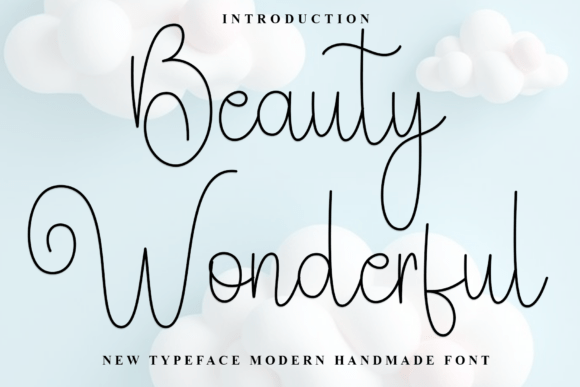
The visual language of Beauty Wonderful is defined by its distinctive strokes, which give it a special character that feels both intentional and effortless. When I applied this Fonts option to a logo concept for a handmade soap brand, the contrast between the fluid ligatures and the clean negative space created an instant sense of luxury without trying too hard. Unlike many script fonts that feel chaotic or overly decorative, Beauty Wonderful maintains a consistent baseline rhythm. This consistency is crucial for brand identity because it ensures recognition. In the wellness and beauty niche, where trust and approachability are paramount, the soft curves of this typeface communicate care and gentleness. It avoids the stiffness of traditional calligraphy while retaining enough structure to be legible at medium sizes. For designers building a brand board for a spa, a yoga studio, or a natural cosmetics line, Beauty Wonderful serves as a perfect anchor for emotional connection. It doesn’t shout; it whispers, which is often exactly what modern consumer branding requires.
Testing Beauty Wonderful on Packaging Labels and Product Mockups
One of the most challenging aspects of typography is seeing how it holds up when scaled down or wrapped around physical objects. I took Beauty Wonderful and placed it on a cylindrical label mockup for a candle brand. At first glance, the eye-catching nature of the font stood out beautifully against the matte black background. However, readability is always a concern with script typefaces. I found that Beauty Wonderful performs best when used for short phrases rather than long descriptions. On the packaging, I used it for the product name ("Lavender Haze") and paired it with a simple sans-serif for the ingredients list. This hierarchy worked seamlessly. The distinctive strokes of the script drew the eye immediately, acting as the primary visual hook, while the supporting text provided clarity. If you are designing product labels, business cards, or wedding invitations, keep the copy concise. Let the Script Handwritten style do the heavy lifting for emotional impact, and use neutral fonts for data. This approach prevents visual clutter and ensures your design assets remain professional and easy to read.
How Beauty Wonderful Enhances Social Media Graphics and Digital Headers
In the digital space, attention spans are short, and scroll-stopping visuals are essential. I tested Beauty Wonderful in Instagram story templates and website hero sections. Because it is designed with a soft, unique touch, it translates exceptionally well to high-resolution screens. On a website header, using Beauty Wonderful for the main headline created an immediate sense of elegance. It felt premium and curated. However, I noticed that on smaller mobile screens, if the text size was reduced below 16px, the intricate details of the strokes began to blur slightly. This is a common limitation of creative fonts, so it’s vital to test responsiveness. For social media graphics, I used the font as an accent over photography. The versatility of Beauty Wonderful allows it to sit comfortably over busy backgrounds without clashing, provided there is sufficient contrast. Whether you are a content creator making reels or a marketer designing ad banners, this font adds a layer of sophistication that generic templates lack. It elevates simple compositions into polished editorial designs.
Pairing Strategies: Balancing Beauty Wonderful with Serif and Sans Serif Fonts
No font exists in isolation, and finding the right companion is key to a cohesive modern typography system. Beauty Wonderful has enough personality to stand alone as a display font, but it pairs beautifully with simpler typefaces to create balance. I experimented with pairing it with a classic serif font for editorial layouts, such as magazine covers or blog post titles. The juxtaposition of the handwritten flow against the structured serifs created a timeless, literary feel. Alternatively, pairing it with a clean sans serif font worked wonders for contemporary brand identities. The contrast between the organic curves of Beauty Wonderful and the geometric precision of a sans serif creates dynamic visual interest. When designing business cards or letterheads, I recommend using Beauty Wonderful for the name or logo mark and a highly legible sans serif for contact details. This combination ensures that while the brand looks artistic and unique, it remains functional and accessible. Avoid pairing it with other script fonts unless you are highly experienced in typographic hierarchy, as competing scripts can create visual noise.
Practical Considerations for Commercial Use and Licensing
Before integrating Beauty Wonderful into final client work, it is important to review the specific styles, alternates, and ligatures included in the package. Many modern script fonts come with swashes and alternative characters that allow for customization, which can help tailor the font to a specific brand voice. Check if the file formats include webfont availability if you plan to use the font on websites; embedding custom fonts requires proper licensing. Furthermore, always verify the commercial font licensing terms. While Beauty Wonderful is versatile for future use, including in merchandise, templates, and print-on-demand products, some licenses restrict resale or require separate agreements for large-scale distribution. As a designer, protecting both yourself and your client means understanding these boundaries. Test the font thoroughly in your workflow before committing to a brand identity. Create drafts, export proofs, and see how the Script Handwritten style interacts with your chosen color palette and imagery. If the font feels forced or difficult to read in context, it may not be the right fit, regardless of its aesthetic appeal.
When to Avoid Beauty Wonderful in Corporate or Technical Design
While Beauty Wonderful is a beautiful and eye-catching font, it is not a universal solution. Its soft, unique touch makes it ideal for lifestyle, beauty, and creative industries, but it may struggle in contexts requiring strict formality or high-density information. For example, using this font for legal documents, technical manuals, or corporate annual reports would likely undermine the desired tone of authority and precision. The distinctive strokes, while charming, can reduce legibility in small body text. If you are designing a navigation menu for a large e-commerce site or a data dashboard, stick to a robust sans serif or monospace font. Beauty Wonderful shines as an accent font, a headline typeface, or a decorative element. It is meant to evoke emotion, not to convey complex data efficiently. Recognizing these limitations is part of being a professional designer. By reserving Beauty Wonderful for projects where warmth and elegance are prioritized over utility, you ensure that the font enhances the brand message rather than distracting from it.