Summer Ocean: A Vibrant Decorative Font for Sunny Campaigns
The client brief landed in my inbox at 9:00 AM on a Tuesday. They needed a cohesive visual identity for a mid-July product launch targeting a young, mobile-first audience. The mood board was filled with turquoise gradients, sun-bleached textures, and high-energy imagery. As I opened the design file to start laying out the Instagram carousel and YouTube thumbnails, I realized that standard sans-serifs felt too corporate, while overly ornate scripts lacked the punch needed for fast-scrolling feeds. That was when I pulled Summer Ocean into the project. It wasn’t just a typeface choice; it became the anchor for the entire campaign’s visual hierarchy.
This review breaks down how this decorative font performs in real-world digital marketing workflows, specifically focusing on its ability to drive engagement through bold, wave-inspired aesthetics.
Why Summer Ocean Elevates Social Media Graphics and Reels Covers
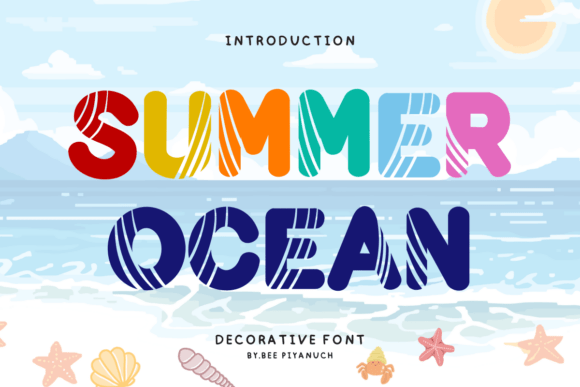
Summer Ocean is a vibrant decorative font inspired by sunny beach days and ocean waves, making it an immediate attention-grabber for social media graphics and reels covers. In a feed where users scroll past dozens of posts in seconds, visual distinctiveness is currency. The playful alphabet features bold shapes with wave stripe details that bring a fresh summer vibe to your designs, allowing brands to communicate energy without relying solely on photography.
When designing a set of static Instagram posts or story highlights, using this font for headlines creates an instant thematic connection. Unlike generic display fonts that can feel dated, the unique stroke variations in Summer Ocean mimic the fluidity of water. This works exceptionally well for lifestyle brands, travel agencies, and seasonal product launches. For example, during a recent test for a swimwear collection, pairing the main headline in Summer Ocean with clean white space allowed the typography to act as the primary visual element, reducing the need for heavy graphic overlays.
The font’s personality is relaxed yet confident. It avoids the stiffness of traditional serif fonts and the rigidity of geometric sans-serifs. Instead, it offers a creative font option that feels handcrafted but structured enough for digital screens. When used for callouts like "New Drop" or "Limited Edition," the wave stripe details add texture that draws the eye, increasing the likelihood of a user pausing their scroll.
Summer Ocean for YouTube Thumbnails and Video Content Titles
For content creators and YouTubers, Summer Ocean serves as a powerful tool for thumbnail text and video content titles. Thumbnail design is a battle for visibility, and readability at small sizes is critical. While many decorative fonts become illegible when scaled down, Summer Ocean maintains its bold presence due to its thick x-height and open counters.
In a workflow involving a series of educational videos or vlogs, I tested Summer Ocean against other trendy fonts. The result was clear: the font’s organic curves softened the overall composition, making the thumbnail feel more inviting and less aggressive than typical "clickbait" typography. However, strategic placement is key. Because the font has significant visual weight, it works best for short phrases—three to five words maximum. Using it for longer sentences can clutter the thumbnail, especially when combined with background images.
Additionally, the font pairs beautifully with modern typography systems used in video editing software. By combining Summer Ocean for the main hook with a clean sans-serif font for secondary information (like dates or speaker names), designers can create a clear visual hierarchy. This approach ensures that the viewer’s eye is drawn to the emotional trigger first, then guided to the factual details. It is particularly effective for summer-themed challenges, travel vlogs, or lifestyle tutorials where the aesthetic needs to match the content’s upbeat tone.
Using Summer Ocean in Digital Ads and Landing Page Headers
When building digital ad layouts or landing page headers, Summer Ocean helps establish brand identity quickly. Advertisers often struggle with creating assets that look native to a platform while still standing out from competitors. This decorative font bridges that gap by offering a premium font quality that feels bespoke rather than stock.
For e-commerce campaigns, such as a seasonal sale or a flash discount, Summer Ocean can be used to create urgency without shouting. The wave stripe details add a layer of sophistication that elevates the perceived value of the offer. In one campaign test for an online shop, we used Summer Ocean for the header banner alongside a light pastel background. The contrast between the bold, textured letters and the soft background created a balanced composition that felt both energetic and trustworthy.
However, marketers must be mindful of context. This font is not suitable for dense information or long copy. It is strictly a display font intended for headlines, logo-style text, and promotional banners. Using it for body text will hinder readability and frustrate users trying to find specific product details. Instead, use Summer Ocean to capture attention at the top of the funnel, then transition to a highly legible sans-serif font for the product descriptions and checkout buttons. This separation of roles ensures that the creative appeal supports the conversion goal rather than obstructing it.
Font Pairing Strategies for Branded Templates and Email Promotions
To maximize the impact of Summer Ocean, strategic font pairing is essential for branded templates and email promotions. A single decorative font cannot carry an entire design system. It needs support from neutral typefaces that provide structure and clarity. The most effective pairings involve a clean sans-serif font or a subtle script font.
For email marketing, I recommend using Summer Ocean for the preheader or the main subject line graphic, paired with a standard web-safe sans-serif for the email body. This combination ensures that the email looks visually striking in the inbox preview while remaining easy to read on mobile devices. Similarly, for Pinterest pins, which are heavily image-driven, Summer Ocean can serve as the overlay text, while a simple sans-serif handles the pin description. This approach leverages the font’s strength in creating a strong first impression while maintaining functional usability.
Before deploying these fonts in commercial projects, it is crucial to check included styles, alternates, ligatures, weights, and file formats. Ensure that the license allows for the intended use, whether it is for digital ads, merchandise, or client campaigns. Multilingual support is also a factor if your audience spans different regions. By verifying these technical details upfront, you avoid last-minute redesigns and ensure a smooth workflow from concept to final asset delivery.
Best Practices for Mobile Readability and Fast-Scrolling Feeds
Finally, optimizing Summer Ocean for mobile screens requires careful consideration of scale and contrast. Most social media consumption happens on smartphones, where screen real estate is limited. To ensure message clarity, keep text large and centered. Avoid placing complex wave details near thin lines or intricate background patterns, as this can cause visual vibration or moiré effects.
Testing on actual devices is non-negotiable. What looks balanced on a desktop monitor may appear cramped or pixelated on a smaller phone screen. Use dark backgrounds with light-colored text or vice versa to maximize contrast. Summer Ocean’s bold shapes hold up well against dark mode interfaces, offering a sleek, modern look that aligns with current design trends. By adhering to these best practices, designers can harness the full potential of this creative font to boost audience engagement and reinforce brand recognition across all digital touchpoints.